

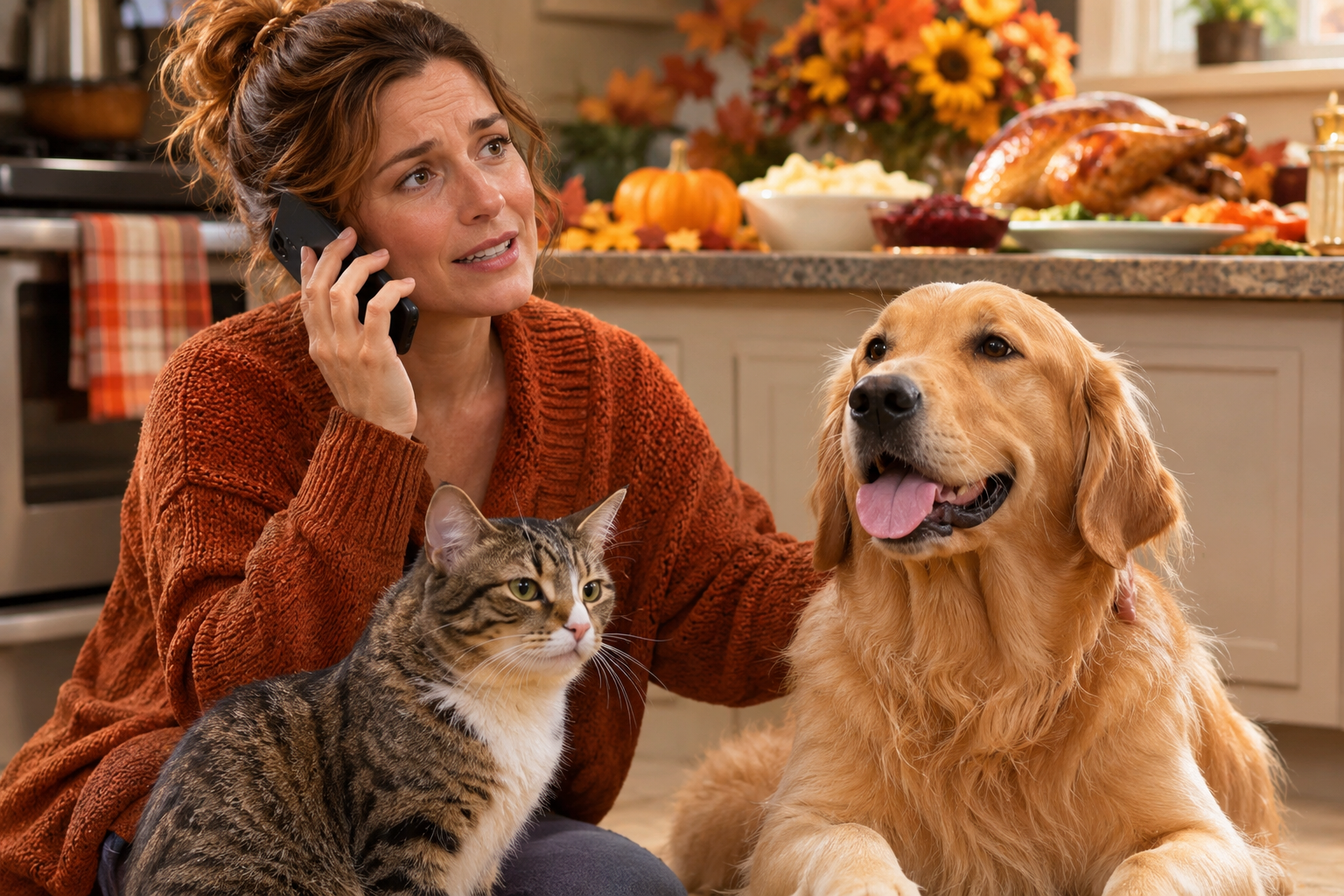
Thanksgiving dinner is over. The leftovers are packed away, the dishes are finally done, and everyone is recovering from a day of eating a little more than usual.
But the next morning, you notice something isn’t right with your dog.
Maybe they aren’t interested in breakfast. Maybe they’ve vomited overnight or seem unusually tired.
Or perhaps your cat, who was suspiciously interested in the turkey yesterday, has suddenly decided to hide under the bed.
Could Thanksgiving dinner be responsible?
At North Peoria Veterinary Hospital in Peoria, AZ, we want pet owners to understand why holiday food can cause problems, even when symptoms don’t appear until the following day.
Here’s what to watch for after Thanksgiving and how to know when your pet needs veterinary attention.
Why Pets Sometimes Get Sick Hours After Eating
Dogs and cats don’t always react immediately after eating something inappropriate.
Some foods cause digestive upset within a few hours, while other ingredients can lead to complications much later.
For example, a fatty meal may trigger vomiting or pancreatitis.
Onions and garlic can damage red blood cells, with symptoms sometimes appearing several days after ingestion.
Grapes and raisins can cause acute kidney injury in dogs, and early signs may be subtle.
This is why it’s important to pay attention to what your pet ate, even if they seemed perfectly normal during Thanksgiving dinner.
Your Dog Is Vomiting After Eating Turkey
Turkey can be a safe occasional treat for dogs when it’s plain, fully cooked, boneless, and skinless.
But Thanksgiving turkey often comes with butter, seasoning, gravy, and fatty skin.
These additions can irritate the digestive system.
A dog that eats a large amount of rich food may develop vomiting, diarrhea, abdominal discomfort, or loss of appetite.
In some cases, fatty meals can trigger pancreatitis.
Pancreatitis is inflammation of the pancreas and may require veterinary treatment or hospitalization.
If your dog vomits repeatedly, seems painful, or refuses food, contact a veterinarian promptly.
Your Cat Isn’t Eating After Thanksgiving
Cats can be particularly good at hiding signs of illness.
Instead of obvious symptoms, you might notice that your cat is quieter than usual, spending more time hiding, or refusing their regular food.
If your cat ate seasoned turkey, stuffing, or gravy, they may have consumed ingredients that are harmful.
Onions and garlic are especially concerning because cats are sensitive to their toxic effects.
These ingredients can damage red blood cells and potentially cause anemia.
Symptoms may include weakness, pale gums, rapid breathing, and reduced appetite.
Because signs can be delayed, contact your veterinarian if you suspect your cat ate onion- or garlic-containing food.
A cat that isn’t eating normally also deserves prompt veterinary attention.
The Difference Between Digestive Upset and Pancreatitis
A pet that eats unfamiliar food may experience mild digestive irritation.
However, repeated vomiting, significant abdominal pain, or persistent loss of appetite can indicate a more serious condition.
Pancreatitis is one possibility, especially after a fatty meal.
Dogs with pancreatitis may appear hunched, restless, or reluctant to move.
They may also experience vomiting, diarrhea, dehydration, and lethargy.
The condition varies in severity, and some pets need hospitalization for supportive care.
If your pet seems uncomfortable or continues vomiting, don’t assume they simply ate too much.
What If Your Pet Ate Something Toxic Yesterday?
Some Thanksgiving ingredients require immediate veterinary guidance, even if your pet hasn’t developed symptoms.
Grapes and raisins can cause acute kidney injury in dogs.
Chocolate can affect the heart and nervous system.
Xylitol, found in some sugar-free products, can cause dangerously low blood sugar and liver injury in dogs.
Onions and garlic can damage red blood cells in dogs and cats.
If you discover that your pet ate one of these ingredients yesterday, contact a veterinarian immediately.
Don’t wait for symptoms to appear or worsen.
The Leftover Foods That Can Still Cause Problems
Thanksgiving food hazards don’t disappear when the holiday ends.
Turkey bones, greasy leftovers, stuffing, and desserts may remain in the refrigerator or trash.
Dogs may discover a discarded turkey carcass or rummage through garbage.
Cats may investigate leftover meat or greasy pans.
Cooked bones can splinter, and swallowed corn cobs or food wrappers can cause intestinal blockages.
Secure trash containers and keep leftovers out of reach throughout the holiday weekend.
What to Do When Your Pet Seems Sick
Start by considering what your pet may have eaten.
Did someone share table scraps? Was food left unattended? Did your pet get into the garbage?
Try to identify the ingredients and approximate amount consumed.
Contact your veterinarian and explain the symptoms you’re noticing.
Avoid giving human medications or attempting home remedies without veterinary instructions.
If your pet is vomiting repeatedly, experiencing severe abdominal pain, having trouble breathing, or showing significant weakness, seek emergency veterinary care.
Symptoms That Require Immediate Attention
Some warning signs should never be ignored.
Seek emergency care for seizures, collapse, difficulty breathing, severe abdominal swelling, or repeated unproductive retching.
Significant tremors, disorientation, or severe weakness are also concerning.
Remember that some food-related toxicities can cause delayed complications, so professional guidance is important after known exposures.
How to Prevent a Repeat Next Year
If your pet got into Thanksgiving food this year, consider making a few changes before the next holiday gathering.
Keep serving dishes away from counter edges.
Ask guests not to share table scraps.
Dispose of turkey bones and food waste in secured containers.
Prepare a small pet-safe treat ahead of time so your dog or cat can participate without eating rich holiday dishes.
For pets with sensitive stomachs or prescription diets, sticking with their regular food is usually the safest choice.
Helping North Peoria Pets Feel Their Best
Thanksgiving should leave your family with happy memories, not a sick pet.
By recognizing the signs of food-related illness and knowing when to seek veterinary attention, you can help protect your dog or cat throughout the holiday weekend.
At North Peoria Veterinary Hospital in Peoria, AZ, we’re here to support local pets with preventive care, nutrition guidance, and veterinary services.
If your pet develops unusual symptoms after Thanksgiving or eats something concerning, contact our team for guidance. For suspected poisoning or severe symptoms, seek emergency veterinary care immediately.